Chen Guangcheng – The Fearless Chinese Activist Who Turned Darkness into Light
From rural blindness to global human rights influence

Introduction
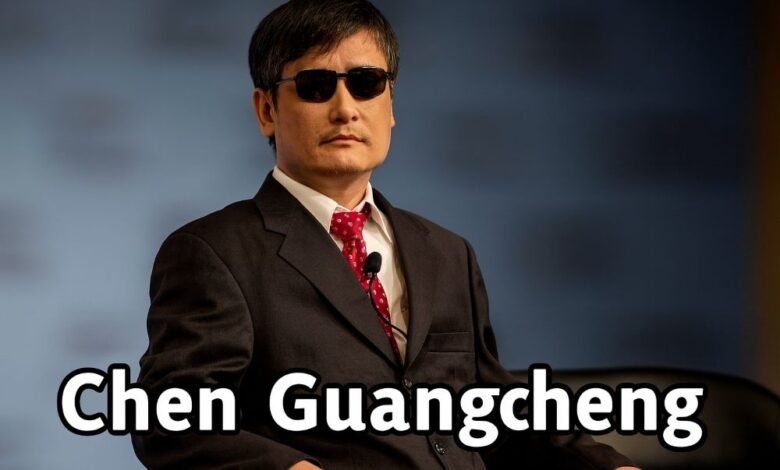
Chen Guangcheng is a globally recognized Chinese activist, celebrated for his remarkable courage and commitment to justice despite lifelong blindness and persecution. Born in rural Shandong, China, he rose from obscurity to become one of the most prominent voices for human rights, rule of law, and freedom. His journey—from a poor blind child to an international symbol of resistance—reflects both the resilience of the human spirit and the struggle against authoritarian repression.
Chen’s life story is not just about hardship, but about transformation, perseverance, and the relentless pursuit of justice. Through his self-taught legal skills, he became a beacon of hope for thousands of rural citizens suffering under government abuses. His escape from house arrest in 2012 and subsequent asylum in the United States marked one of the most dramatic episodes in modern human rights history.
Table of Contents
ToggleQuick Bio
| Full Name | Chen Guangcheng (陈光诚) |
|---|---|
| Date of Birth | November 12, 1971 |
| Age (2025) | 53 years |
| Birthplace | Dongshigu Village, Yinan County, Linyi, Shandong Province, China |
| Nationality | Chinese-born, American citizen |
| Ethnicity | Han Chinese |
| Profession | Human Rights Activist, Legal Advocate |
| Education | Nanjing University of Traditional Chinese Medicine |
| Marital Status | Married to Yuan Weijing |
| Children | Two |
| Known For | Exposing human rights abuses in China and fighting for the rule of law |
Early Life and Education
Chen Guangcheng was born into a poor peasant family in Shandong Province, China. At only six months old, a severe fever left him permanently blind. Despite poverty and disability, Chen showed early signs of resilience. Growing up in a small village where opportunities were scarce, he faced constant challenges in accessing education. However, he refused to let blindness define his future.
In his late teens, Chen attended the Linyi School for the Blind and later the Qingdao High School for the Blind. He went on to study acupuncture and massage therapy at the Nanjing University of Traditional Chinese Medicine. During his studies, Chen began to develop a deep interest in Chinese law. He realized that while China had laws protecting the rights of its citizens, the government often ignored them. This revelation inspired him to become self-taught in legal advocacy, marking the beginning of his life-long mission as a “barefoot lawyer.”
The Beginning of Activism and Legal Advocacy
After graduation, Chen returned to his village determined to help those without a voice. He began assisting farmers, workers, and disabled citizens to petition against unjust taxes, illegal land seizures, and corruption. His dedication quickly earned him recognition as a fearless Chinese activist who was willing to challenge local authorities.
In 2005, Chen exposed one of the most disturbing human rights violations in modern China—forced abortions and sterilizations carried out under the one-child policy in Linyi County. He collected testimonies from women and families who had suffered at the hands of local officials and helped them seek justice. This brave action placed him in direct conflict with the Chinese government, setting off years of persecution and imprisonment.
Imprisonment and House Arrest
Chen’s activism angered local authorities. In 2005, he was placed under illegal house arrest for investigating family planning abuses. The following year, he was charged with “damaging property” and “disturbing public order,” accusations widely condemned as politically motivated. In August 2006, Chen was sentenced to four years and three months in prison.
After his release in 2010, he remained under intense surveillance, with his home surrounded by guards and communication lines cut. He and his family endured beatings, isolation, and harassment. Despite these oppressive conditions, Chen continued to speak out, smuggling messages through friends and supporters to reveal the truth about life under China’s “soft detention” system.
The Dramatic Escape and International Asylum
In April 2012, after two years of strict confinement, Chen made a daring escape from his heavily guarded home. Injured but undeterred, he traveled hundreds of kilometers to Beijing, where he found refuge at the U.S. Embassy. His escape became a symbol of defiance and sparked global headlines. For days, the world watched as the U.S. and Chinese governments negotiated his fate amid mounting international pressure.
Eventually, both sides agreed that Chen would be allowed to leave China with his family. On May 19, 2012, Chen Guangcheng, his wife Yuan Weijing, and their two children boarded a flight to the United States. His arrival in New York was greeted with applause and admiration from human rights organizations, activists, and political leaders worldwide.
Life and Work in the United States
After arriving in America, Chen joined New York University (NYU) as a visiting scholar to study law and human rights. He later became affiliated with the Witherspoon Institute and The Catholic University of America, continuing his advocacy for democracy and freedom. He also serves as a Senior Advisor at the Lantos Foundation for Human Rights and Justice.
Chen published his autobiography, “The Barefoot Lawyer: A Blind Man’s Fight for Justice and Freedom in China” in 2015, which recounts his extraordinary journey from oppression to freedom. In the United States, he continues to speak at universities, international conferences, and global forums, urging nations to stand up against authoritarian regimes and support the values of liberty and justice.
Awards and Global Recognition
Chen Guangcheng’s courageous activism has earned him numerous international honors, including:
-
TIME 100 Most Influential People (2006)
-
Ramon Magsaysay Award (2007)
-
National Endowment for Democracy Award (2008)
-
Lantos Human Rights Prize (2012)
-
Geneva Summit Courage Award (2014)
-
Bradley Prize (2022)
Each recognition celebrates his extraordinary dedication to justice, courage under persecution, and contribution to the global human rights movement.
Legacy and Impact
Chen Guangcheng’s legacy is that of a man who turned blindness into vision — a vision of freedom and equality. His story continues to inspire lawyers, activists, and ordinary citizens across the world. Despite facing threats, imprisonment, and exile, he never abandoned his principles.
Today, Chen stands as one of the most respected voices in the international community advocating for the oppressed. His life reminds us that true power lies not in authority or wealth, but in integrity and persistence. As a Chinese activist who challenged tyranny, his name has become synonymous with courage and hope.
Conclusion
Chen Guangcheng’s life journey—from a blind boy in a rural village to a global symbol of human rights—proves that determination can overcome the darkest circumstances. He embodies the idea that justice is not granted but fought for, even against impossible odds.
His message remains clear: one individual’s courage can challenge an entire system. In a world still facing injustice and oppression, Chen Guangcheng’s story is both a warning and an inspiration for generations to come.
FAQs
1. Who is Chen Guangcheng?
Chen Guangcheng is a Chinese activist, lawyer, and human rights defender known for exposing abuses under China’s one-child policy and advocating for the rights of rural citizens and the disabled.
2. Where was Chen Guangcheng born?
He was born in Dongshigu Village, Yinan County, Shandong Province, China, on November 12, 1971.
3. What is Chen Guangcheng best known for?
He is best known for his fight against forced abortions, corruption, and legal abuses in rural China, as well as his dramatic escape to the United States in 2012.
4. Is Chen Guangcheng still active in human rights work?
Yes, he continues his activism in the United States, promoting democracy, freedom, and the rule of law through speeches and academic work.
5. What is the title of Chen Guangcheng’s book?
His memoir is titled “The Barefoot Lawyer: A Blind Man’s Fight for Justice and Freedom in China.”