Major Garrett: A Powerful Voice of Truth in American Political Journalism
The Enduring Authority of an American Journalist Who Shaped Modern Political Reporting

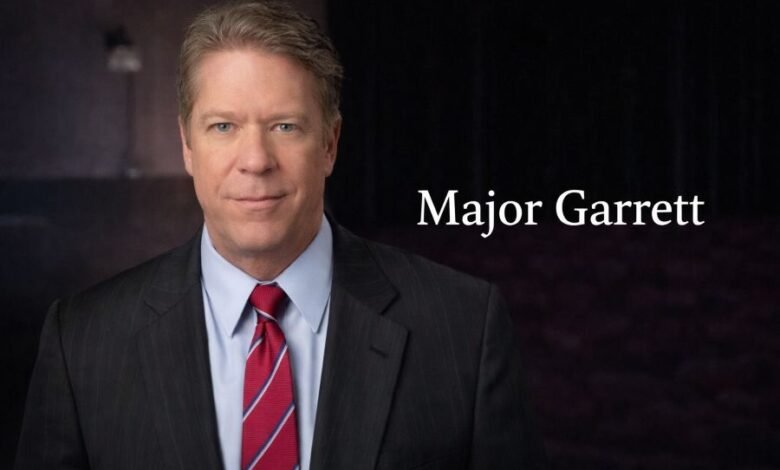
Table of Contents
ToggleIntroduction
Major Garrett stands as one of the most recognizable and respected figures in American political journalism. With decades of experience reporting from the heart of Washington, he has built a reputation for clarity, persistence, and professionalism. His work reflects both the strength and the pressure of covering power at the highest level, where every question matters and every answer shapes public understanding.
While admired for his balanced reporting and deep institutional knowledge, Major Garrett’s career has not been without challenges. Covering politics in a polarized era exposes journalists to criticism from all sides. Yet, his ability to remain focused on facts rather than noise has strengthened his standing as a trusted American journalist and an authoritative voice in political media.
Quick Bio: Major Garrett
| Attribute | Details |
|---|---|
| Full Name | Major Elliott Garrett |
| Known As | Major Garrett |
| Date of Birth | August 24, 1962 |
| Age | 63 years |
| Birthplace | San Diego, California, United States |
| Nationality | American |
| Profession | American Journalist, Author, Television Correspondent |
| Education | University of Missouri |
| Current Role | Chief Washington Correspondent, CBS News |
| Years Active | 1980s–Present |
Early Life and Educational Foundation
Major Elliott Garrett was born in San Diego, California, where he spent his formative years developing an interest in current affairs and public institutions. Growing up in a period of major political change in the United States, he was exposed early to the significance of government decisions and the role of the press in democracy.
His academic journey led him to the University of Missouri, a respected institution for journalism education. There, he earned a Bachelor of Journalism alongside a Bachelor of Science in Political Science. This dual academic background equipped him with both technical reporting skills and a deep understanding of political systems, laying the groundwork for a career focused on national governance and accountability.
The Start of a Journalism Career
Major Garrett began his professional career in print journalism, where accuracy and discipline are essential. His early roles involved reporting for regional newspapers, allowing him to master the fundamentals of newsgathering, investigative research, and deadline-driven storytelling.
These early years shaped his professional character. Working in print media required persistence, precision, and the ability to explain complex political topics to everyday readers. This foundation would later become one of his strongest assets as he transitioned into national political reporting and broadcast journalism.
Rise Through Print Journalism
Before becoming a familiar face on television, Major Garrett built credibility through serious political reporting in print publications. He covered Congress extensively, focusing on legislative processes and national policy debates. His reporting style emphasized facts, context, and institutional knowledge rather than sensationalism.
During this phase, he developed a reputation for reliability and depth. These qualities helped him gain access to high-level political sources and positioned him as a journalist capable of handling complex national stories. His print journalism years were crucial in shaping him into the authoritative American journalist audiences recognize today.
Transition to Broadcast Journalism
The move from print to broadcast journalism marked a significant turning point in Major Garrett’s career. Television required not only journalistic accuracy but also clarity, confidence, and the ability to communicate under live pressure. He successfully made this transition by maintaining his fact-driven approach while adapting to the demands of on-air reporting.
As a broadcast correspondent, he covered the White House, Congress, and national elections. His reporting was marked by direct questioning and a refusal to oversimplify complex issues. This approach earned him respect from viewers who sought substance rather than spectacle in political coverage.
Career at CBS News and National Recognition
Major Garrett’s career reached a new level of prominence with his role at CBS News, where he became Chief White House Correspondent and later Chief Washington Correspondent. In these roles, he reported on presidential administrations, policy debates, and election cycles that defined modern American politics.
His work at CBS News reinforced his reputation as a journalist committed to democratic principles. While his questioning style has sometimes drawn criticism from political figures, it has also been praised as an example of responsible journalism. This balance of toughness and professionalism has become a defining feature of his career.
Author and Political Commentator
Beyond daily reporting, Major Elliott Garrett has contributed to political discourse as an author. His books explore themes of governance, political strategy, and the challenges facing democratic institutions. Writing long-form political analysis allowed him to expand beyond news cycles and offer deeper insights into American politics.
His work as an author complements his journalism by providing historical perspective and critical analysis. This dual role strengthens his influence as both a reporter of events and an interpreter of political meaning for a broader audience.
Professional Strengths and Criticism
One of Major Garrett’s greatest strengths is his commitment to facts and institutional knowledge. He is widely recognized for asking difficult questions that hold leaders accountable. This has earned him admiration among audiences who value serious journalism.
At the same time, operating in a highly polarized media environment means his work is sometimes criticized by partisan voices. These criticisms, however, reflect the broader challenges faced by American journalists covering national politics. His continued presence and credibility suggest that professionalism remains his strongest defense.
Impact and Legacy in American Journalism
Major Garrett’s legacy lies in his consistent dedication to political reporting grounded in facts rather than ideology. Over decades, he has helped audiences understand how power operates within the American system. His career reflects the importance of experienced journalists in maintaining democratic accountability.
As an American journalist, his influence extends beyond individual stories. He represents a model of persistence, adaptability, and ethical reporting in an era of rapid media change. His work continues to shape how political journalism is practiced and perceived in the United States.
Conclusion
Major Garrett’s career illustrates both the rewards and pressures of covering American politics at the highest level. Through print, broadcast journalism, and authorship, he has remained focused on informing the public with clarity and depth. His professional journey demonstrates that strong journalism can endure even in challenging political climates.
With decades of experience and a commitment to democratic values, Major Elliott Garrett stands as a lasting figure in American journalism. His work reminds audiences that asking the right questions is essential to preserving transparency, accountability, and trust in public life.
Frequently Asked Questions (FAQ)
Who is Major Garrett?
Major Garrett is an American journalist and author known for his long career covering U.S. politics and serving as Chief Washington Correspondent for CBS News.
What is Major Garrett’s real name?
His real name is Major Elliott Garrett.
What is Major Garrett known for?
He is known for political reporting, White House coverage, and in-depth analysis of American governance.
Where was Major Garrett born?
He was born in San Diego, California, United States.
What makes Major Garrett influential in journalism?
His decades of experience, fact-based reporting, and commitment to political accountability have made him a respected figure in American journalism.