Malcolm Macdonald: The Powerful Rise of Supermac, His Brilliant Goals, and the Injuries That Cut a Great Career Short
A legendary English footballer who thrilled fans with speed and power, but whose career also shows how injury can limit even the brightest talent.

Introduction
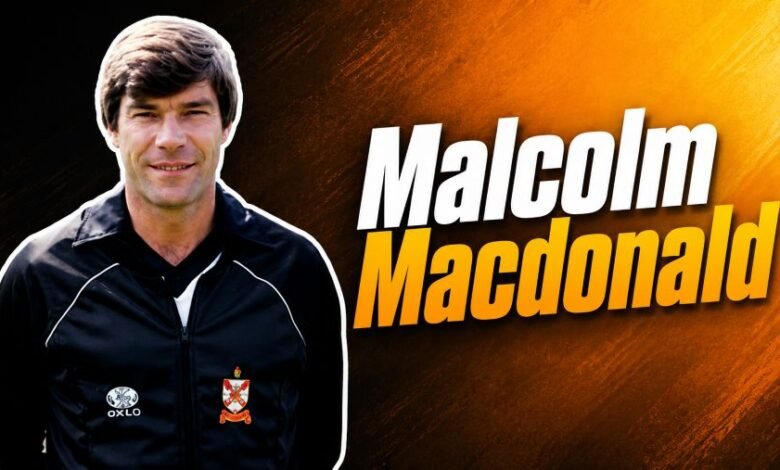
Malcolm Macdonald is remembered as one of the most exciting English footballer names of the 1970s. He was a strong, quick, fearless centre-forward who became famous for his direct style, powerful shooting, and confident personality. Known to supporters as “Supermac,” he built his biggest legacy at Newcastle United, where he became one of the club’s most admired number 9s.
His story is not only about goals and fame. It is also about pressure, injury, and the difficult side of professional sport. Malcolm Macdonald reached major football heights with Newcastle United, Arsenal, and England, but his playing career ended earlier than expected because of knee trouble. That mix of success and struggle makes his biography powerful, human, and memorable.
Quick Bio
| Field | Details |
|---|---|
| Full Name | Malcolm Ian Macdonald |
| Known As | Malcolm Macdonald |
| Nickname | Supermac |
| Gender | Male |
| Date of Birth | 7 January 1950 |
| Age | 76 years old, as of 2026 |
| Birthplace | Fulham, London, England |
| Nationality | English |
| Profession | Former footballer, manager, broadcaster, author |
| Playing Position | Centre Forward, Left Forward |
| Famous For | Newcastle United career and five goals for England vs Cyprus |
| Main Clubs | Fulham, Luton Town, Newcastle United, Arsenal |
| England Career | 1972–1975 |
| England Caps | 14 |
| England Goals | 6 |
| Book | Supermac: My Autobiography |
| Current Public Role | Club President at North Shields FC |
EnglandStats lists his full name as Malcolm Ian Macdonald, born on 7 January 1950 in Fulham, London, with 14 England caps and 6 goals. Newcastle United records him as a Hall of Fame figure with 258 appearances and 138 goals for the club.
Malcolm Macdonald Early Life
Malcolm Macdonald was born in Fulham, London, a football-rich part of England. Publicly available records focus mainly on his sports career rather than private childhood details. For that reason, only confirmed information should be used when writing about his early life.
As a young player, he developed into a forward with pace, power, and a strong goalscoring instinct. His career path took him through Fulham and Luton Town before he became a household football name at Newcastle United.
Malcolm Macdonald as an English Footballer
Malcolm Macdonald became famous as an English footballer because he played with a style that fans could instantly understand. He was not a quiet striker waiting for chances. He attacked defenders, used his strength, and brought excitement whenever he moved toward goal.
Newcastle United describes him as a colourful centre-forward with electric pace and a thunderous shot. That description explains why supporters connected with him so strongly. He had the look and attitude of a classic number 9, but he also had the speed to frighten defenders.
Career Start at Fulham and Luton Town
Macdonald’s senior career included Fulham and Luton Town before his move to Newcastle United. Luton Town was especially important because it helped him grow from a developing player into a serious goalscorer.
His performances at Luton helped open the door to a bigger stage. By the time Newcastle United signed him, he already had the confidence and scoring habit needed for top-level football.
Breakthrough at Newcastle United
The biggest breakthrough in Malcolm Macdonald’s career came at Newcastle United. He joined the club in 1971 and quickly became a major figure at St. James’ Park. Newcastle United says he scored a hat-trick against Liverpool on his home debut, which immediately showed fans what kind of striker they had signed.
That debut was more than a good first impression. It became the start of a powerful connection between player and supporters. From that point, Supermac became one of the most loved attacking players in Newcastle history.
Newcastle United Glory Years
Malcolm Macdonald’s Newcastle United years made him a club legend. The official Newcastle United Hall of Fame describes him as one of the club’s greatest number 9s and a 1970s icon. He scored 138 goals in 258 appearances, a record that explains why his name still matters to Newcastle fans.
He was also important in major cup moments. Newcastle United highlights his two goals in the 1974 FA Cup semi-final against Burnley, a performance that helped push the team to Wembley. His power, pace, and finishing made him one of the most dangerous forwards of his era.
Arsenal Career and Injury Struggle
After his successful Newcastle spell, Malcolm Macdonald joined Arsenal. He continued to score well when fit, and Arsenal’s official historic player page records that he finished his Arsenal career with 57 goals in 108 appearances.
However, injury became the negative side of his story. A clean run of fitness may have made his Arsenal years even greater, but knee problems shortened his playing career. His time at Arsenal remains respected because he still produced strong numbers despite physical setbacks.
England Career
Malcolm Macdonald represented England between 1972 and 1975. EnglandStats records that he earned 14 caps and scored 6 goals. His debut came against Wales on 20 May 1972, and his last cap came against Portugal on 19 November 1975.
His most famous England moment came on 16 April 1975, when he scored five goals against Cyprus. That performance became the defining international moment of his career and remains one of the great individual scoring displays in England history.
Playing Style and Strengths
Macdonald played like a forward who believed he could beat any defender. He had pace, body strength, and a powerful shot. His direct running made him difficult to stop, while his confidence helped him handle pressure in front of big crowds.
He was also a player with presence. The nickname “Supermac” suited him because he did not feel ordinary on the pitch. He gave supporters energy, hope, and entertainment, which is why his public image remained strong even after retirement.
Career Timeline
Early Club Career
Malcolm Macdonald played for Fulham and Luton Town before becoming a Newcastle United star. These early years helped shape him into a confident forward and prepared him for First Division football.
At Luton, his reputation as a goalscorer grew quickly. That period became a stepping stone toward the biggest move of his playing life.
Newcastle United: 1971–1976
Macdonald joined Newcastle United in 1971 and became a club icon. He scored regularly, created memorable moments, and earned the love of supporters at St. James’ Park.
His Newcastle career included 258 appearances and 138 goals according to the club’s official Hall of Fame page. This remains the central chapter of his football legacy.
Arsenal Years
After Newcastle, he moved to Arsenal and continued to score goals. Arsenal records his total as 57 goals in 108 appearances, showing that he remained a dangerous striker even after leaving Tyneside.
His Arsenal spell was also marked by injury. That makes this stage both impressive and frustrating because his talent was still clear, but his body limited his long-term impact.
England Career: 1972–1975
Macdonald played for England from 1972 to 1975. His 14 caps and 6 goals show a short but memorable international career.
His five-goal game against Cyprus remains the highlight. It gave him a permanent place in England football history.
Management, Media, and Later Football Role
After playing, Macdonald moved into football management and later became known in broadcasting. His autobiography also gave supporters a deeper look at his football journey and personal challenges.
Google Books lists Supermac: My Autobiography by Malcolm Macdonald and Colin Malam, published by Highdown in 2003. North Shields FC also publicly listed him as Club President in 2024.
Career Stats
| Area | Record |
|---|---|
| Newcastle United | 258 appearances, 138 goals |
| Arsenal | 108 appearances, 57 goals |
| England | 14 caps, 6 goals |
| Famous England Match | Five goals vs Cyprus, 16 April 1975 |
| England Positions | Centre Forward and Left Forward |
These numbers show why Malcolm Macdonald is remembered as a productive and respected English footballer. His Newcastle and England records are especially important because they include both club loyalty and international history.
Major Achievements
Malcolm Macdonald’s major achievements include becoming a Newcastle United Hall of Fame player, scoring 138 goals for the club, and producing one of England’s most famous individual international performances.
He also built a strong reputation at Arsenal despite injury problems. His 57 goals in 108 Arsenal appearances prove that he remained effective even after leaving Newcastle.
Public Image and Legacy
Macdonald’s public image was bold, powerful, and entertaining. He was not only a scorer; he was also a personality. Fans remembered his confidence, his physical style, and his ability to make matches feel exciting.
His legacy is strongest at Newcastle United, where he remains one of the club’s great number 9 figures. His England legacy is built around that unforgettable five-goal performance, while his wider football story reminds fans how quickly injury can change a career.
Conclusion
Malcolm Macdonald’s biography is a story of speed, strength, goals, fame, and hardship. He rose from Fulham and Luton Town to become a Newcastle United hero, an Arsenal goalscorer, and an England international remembered for one historic night against Cyprus.
He is a positive example of football courage and attacking talent, but his career also carries a negative lesson about injuries and lost years. Even so, Malcolm Macdonald remains a respected English footballer whose name still stands proudly in the history of Newcastle United and England football.
FAQs
Who is Malcolm Macdonald?
He is a former English footballer, manager, broadcaster, and author.
What is Malcolm Macdonald’s full name?
He is officially listed as Malcolm Ian Macdonald.
When was Malcolm Macdonald born?
He was born on 7 January 1950.
Where was he born?
He was born in Fulham, London, England.
What is his nickname?
He is best known by the nickname Supermac.
Which clubs did he play for?
He played for clubs including Fulham, Luton Town, Newcastle United, and Arsenal.
How many goals did he score for England?
He scored 6 goals for England.
What is his most famous career moment?
He is most famous for scoring five goals for England against Cyprus in 1975.